

Truly Madly Deeply
On attracting Alan Rickman’s Snape glare. And remembering the most emotional movie I ever saw. What’s yours?

Ten years ago yesterday (14th January 2016), actor Alan Rickman died, aged 69. Tributes flowed.
Rickman’s best-known movie roles include Severus Snape in Harry Potter, villain Hans Gruber in Die Hard and Harry in Love Actually. I’d first seen him on stage in a brilliant production of Les Liaisons Dangereuses in London in 1985.
My favourite of his films is Truly, Madly, Deeply, which I was lucky enough to see him introduce at Cineworld on the Isle of Wight in March 2009. One year on from the death of its talented director, Anthony Minghella, a Minghella film festival was held.
The Minghella family has an ice cream business here on the island, and I was polishing off a pot of their delicious honey and ginger ice-cream in the third row when Alan Rickman took to the stage and the auditorium fell silent. My scritching of tiny plastic spoon on cardboard pot was suddenly the only audible thing.
He locked eyes, giving me a withering Snape-like glare. He waited for me to put the pot down. Then he began. I was mortified.
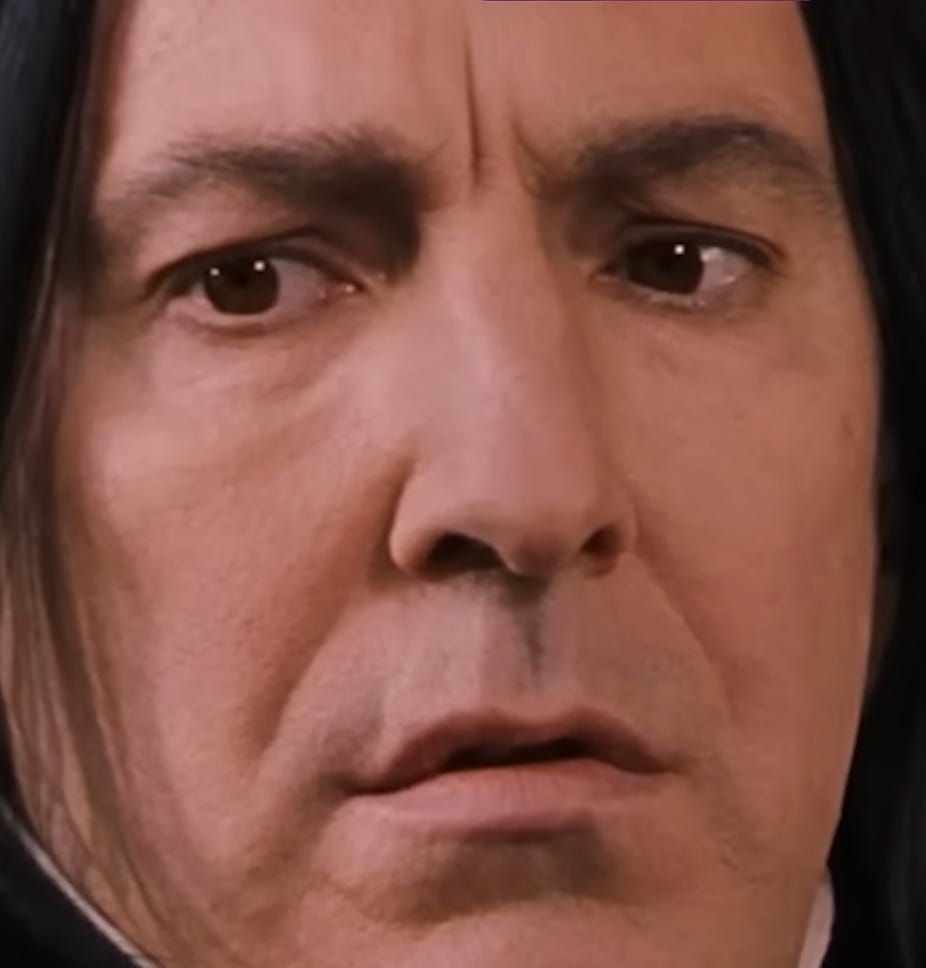
Many in the audience were friends or family of Anthony Minghella, who had been only 54 when he died, so the atmosphere was charged. But I couldn’t have been more moved than when I’d first seen Truly, Madly, Deeply in 1991, soon after its release.
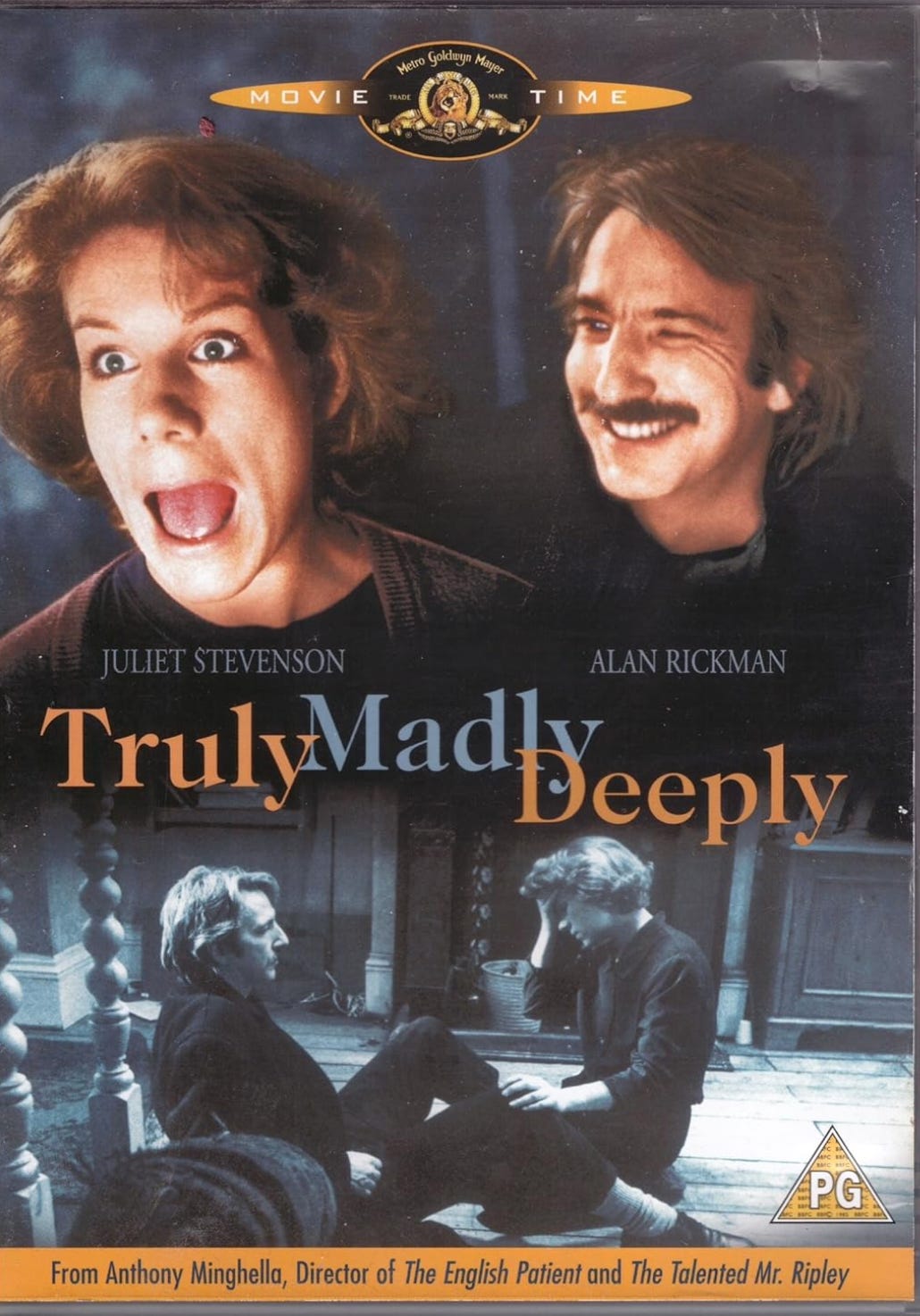
I wrote about how the film affected me in my diary at the time:
Tuesday 24 September 1991
Went to see Truly, Madly, Deeply at Greenwich Cinema with Carol [my sister] last night and am still recovering from my most emotional film-going experience ever.
Juliet Stevenson plays Nina, so distraught over her boyfriend, Jamie’s, death that he eventually can bear her pain no longer and returns as a ghost. The ghosts in this film are the earthiest, yet somehow the most plausible, I’ve ever seen in a film. Jamie brings some of his new ghost mates to her flat to play Bach – he’s a cellist – and watch videos.
The film is comical, but intensely poignant because, while so obviously in love with her dead boyfriend (brilliantly played by Alan Rickman), Nina eventually realises that she must choose life (in the form of Michael Maloney).
I thought I’d just about got my tears under control for the ending, which is happy, except – oh, I can’t bear to write about the ending. It just broke my heart.
I can’t believe you could make a more true and honest film about bereavement. All the more amazing for being so funny as well as so agonisingly sad.
At the end, scarcely anyone moved. I know a lot of people were, like Carol and I, trying to stem the flow of tears. As it turned out, we couldn’t. We hugged each other half way down the stairs of the cinema and had a good sob.
I dreamed about the film all night and woke up still “haunted” by it.
What impressed me so was its matter of fact treatment of ghosts and life after death. It was a very comforting film and took away a lot of the fear and mystery surrounding spirituality and spirits.
Juliet Stevenson’s performance was astonishing. You were right there with her. You believed that this was how it would be to lose someone you love so deeply. I wanted to snuggle up to Ian last night and not let go. There was also the daunting realisation that one day one of us will lose the other, and I now have a vision of how that would feel.
I think this film deserves the highest accolades. It taps into something which could be dreadful and morbid – death, fear of death – and turns it into something joyous.
I woke up glad to be alive. I looked at my daughters, still asleep in their beds and was so grateful. I hugged Ian. There’s a point in the film where ghostly Jamie asks what happens to our huge capacity for love as we grow up. I looked around me this morning and realised it was there, intact. I was so glad.
Last week also marked ten years since David Bowie died (10 January 2016, aged 69, the same age as Alan Rickman). The Grim Reaper had a busy start that year. I wrote a while ago about being number 15,203 of the David Bowie Fan Club in 1975. If this is new to you, here is the link:
Books latest
On recent journeys to and from London, I’ve caught up with three contrasting books on my Kindle.
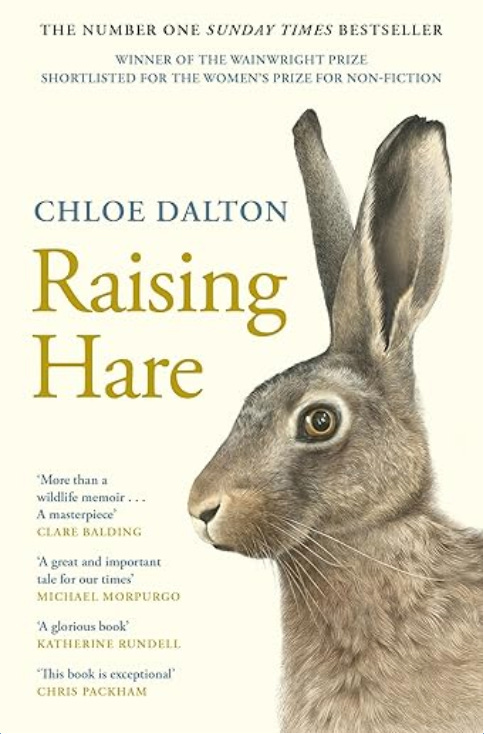
After I wrote about my mum’s habit of caring for tiny creatures, several of you recommended Raising Hare by Chloe Dalton, the true-life story of the rescue of an abandoned leveret. Absolutely fascinating on the delicate balance of rescuing without domesticating.
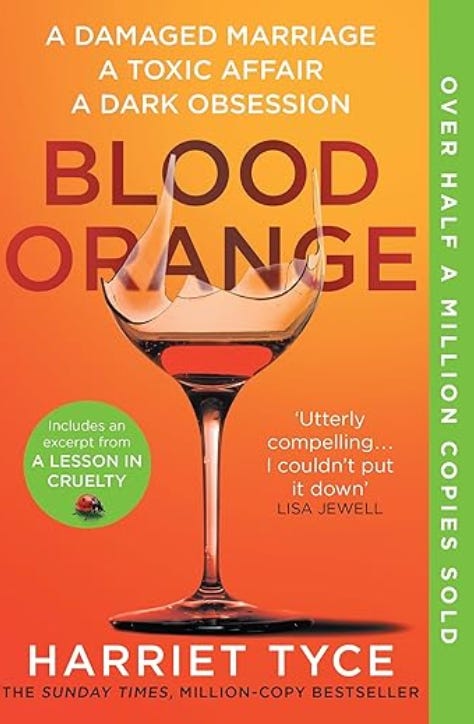
I’m hooked on The Traitors UK (again!) and am intrigued by super-smart barrister turned crime writer Harriet Tyce. I raced through her tightly-plotted debut novel from 2019, Blood Orange. It draws on her legal knowledge and is very gritty on the theme of controlling relationships.
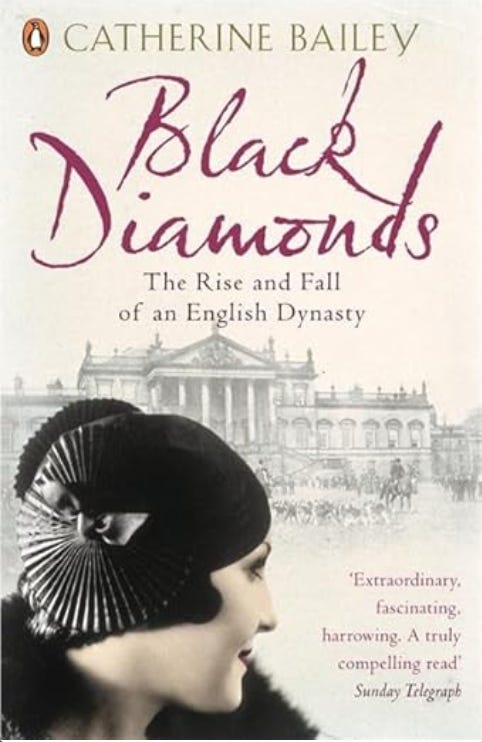
After I wrote my piece, Coal Dust Memories, about growing up in a mining community, several of you recommended Black Diamonds: The Rise and Fall of an English Dynasty, Catherine Bailey’s 2007 book about the history of the enormous stately home, Wentworth Woodhouse. It lies a few miles from where I grew up and sits atop the Barnsley coal seam. The story of the Fitzwilliam family, which owned the house and fought over its future, is riveting. And the insights into mining communities are heart-rending.
Thank you…
…for the wonderful response to last week’s piece, The Ghosts of Parties Past.
Which movie have you found most emotional? Please do comment if you’re able. I love to hear your views.
If you’ve enjoyed reading this, please click the heart so others find my writing, and if you aren’t already a subscriber, please do subscribe so you don’t miss a post.
Until next time!
Lovely post Wendy. I love your diary entries! The Railway Children destroys me every time. Daddy, oh my daddy! Partly filmed in Oakworth, Keighley, where I grew up x
still haven't seen Truly Madly Deeply, should do something about that sometime…
most emotional film: For Sama. And ROMA by Alfonso Cuarón. Also find that E.T. is emotionally *destroying* when rewatched in adulthood.