

Made In Sheffield

I’m catching my breath, just back from a solo road trip to Sheffield and packing for a week’s trip to Paris with choir, to sing in some gorgeous cathedrals.
I’m still processing how I feel about South Yorkshire. As a child, I couldn’t wait to escape. Back then it was a land of coal mining, steel and industry. It held no appeal. On my dad’s side I come from makers and doers, but I dreamed of living and working as a journalist in London. Eventually I achieved that ambition and later moved to the south coast of England.
Visits home were more a duty than a pleasure. But since my parents died in 2021, I’m looking at Sheffield with fresh eyes. My brother moved back to the town nearby, where we grew up. So did some of my oldest friends. I’m feeling the tug to reconnect via family history, to stitch myself back into that landscape, though the coal mines are now grassed over, and the steelworks and factories are shut.
After I wrote about my dad’s Spitfire pilot cousin, Gordon, who died in action towards the end of WW2, I was invited to visit his old school, High Storrs in south-west Sheffield. This week I went along with my brother and sister. The war memorial plaque in the art deco school hall bears his name, A G Richardson (Arthur Gordon), and the country where he died: Holland.
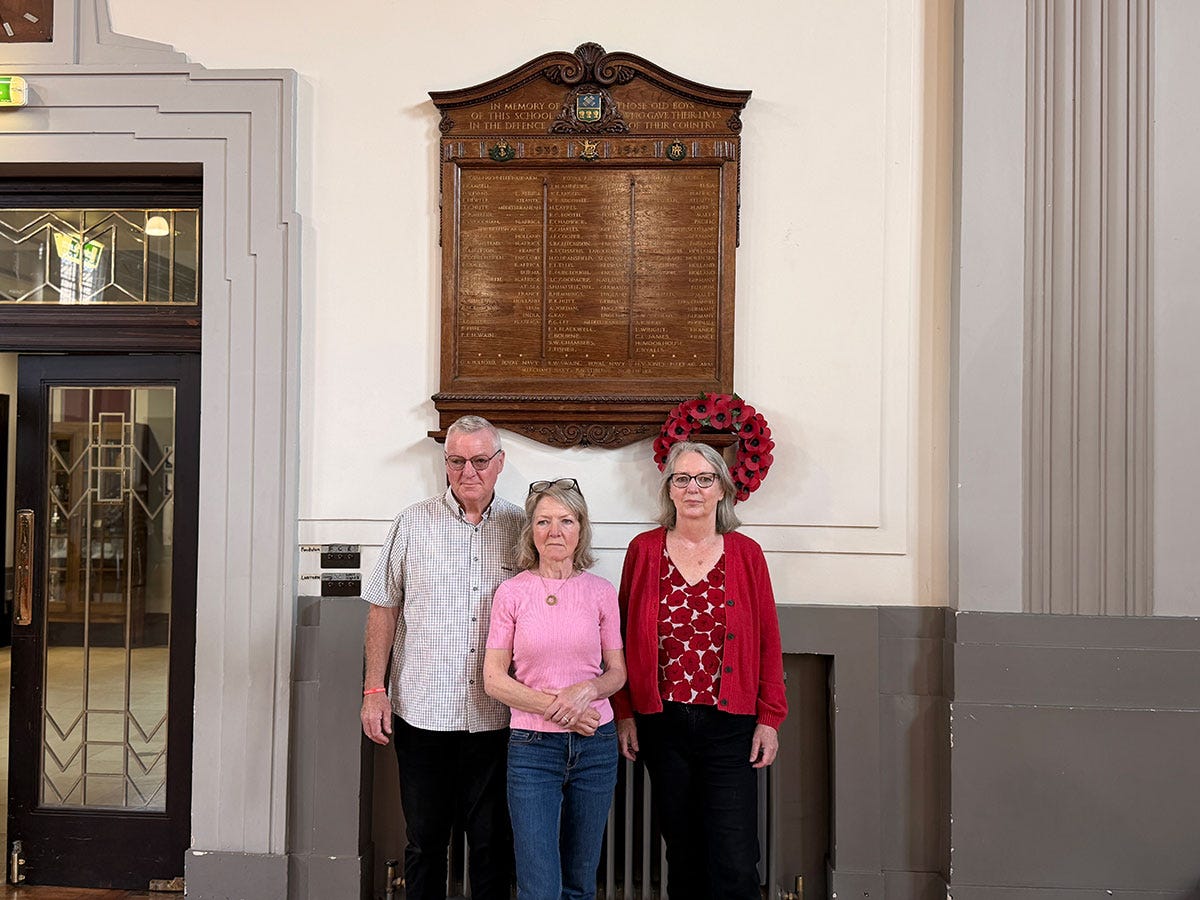
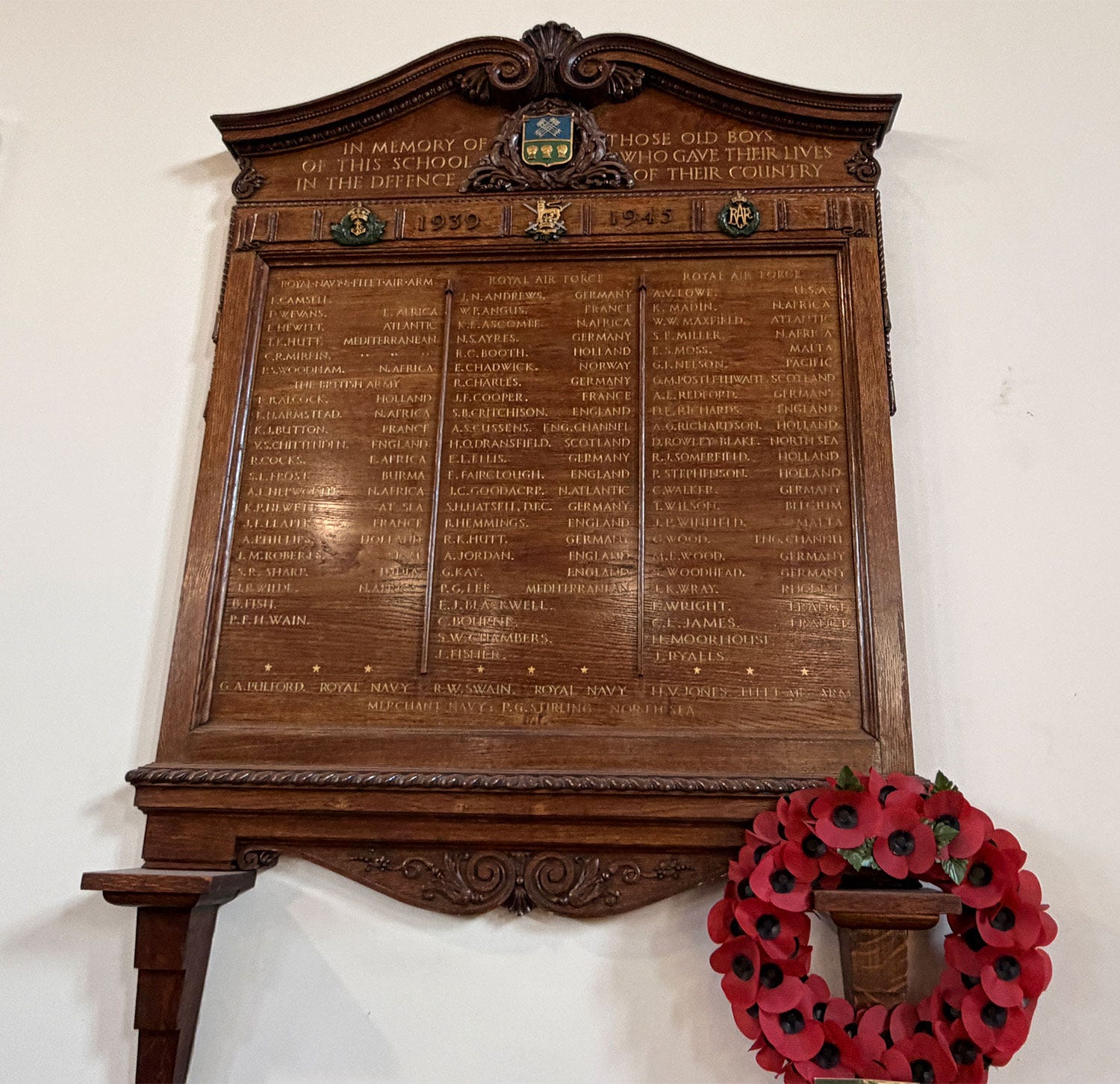
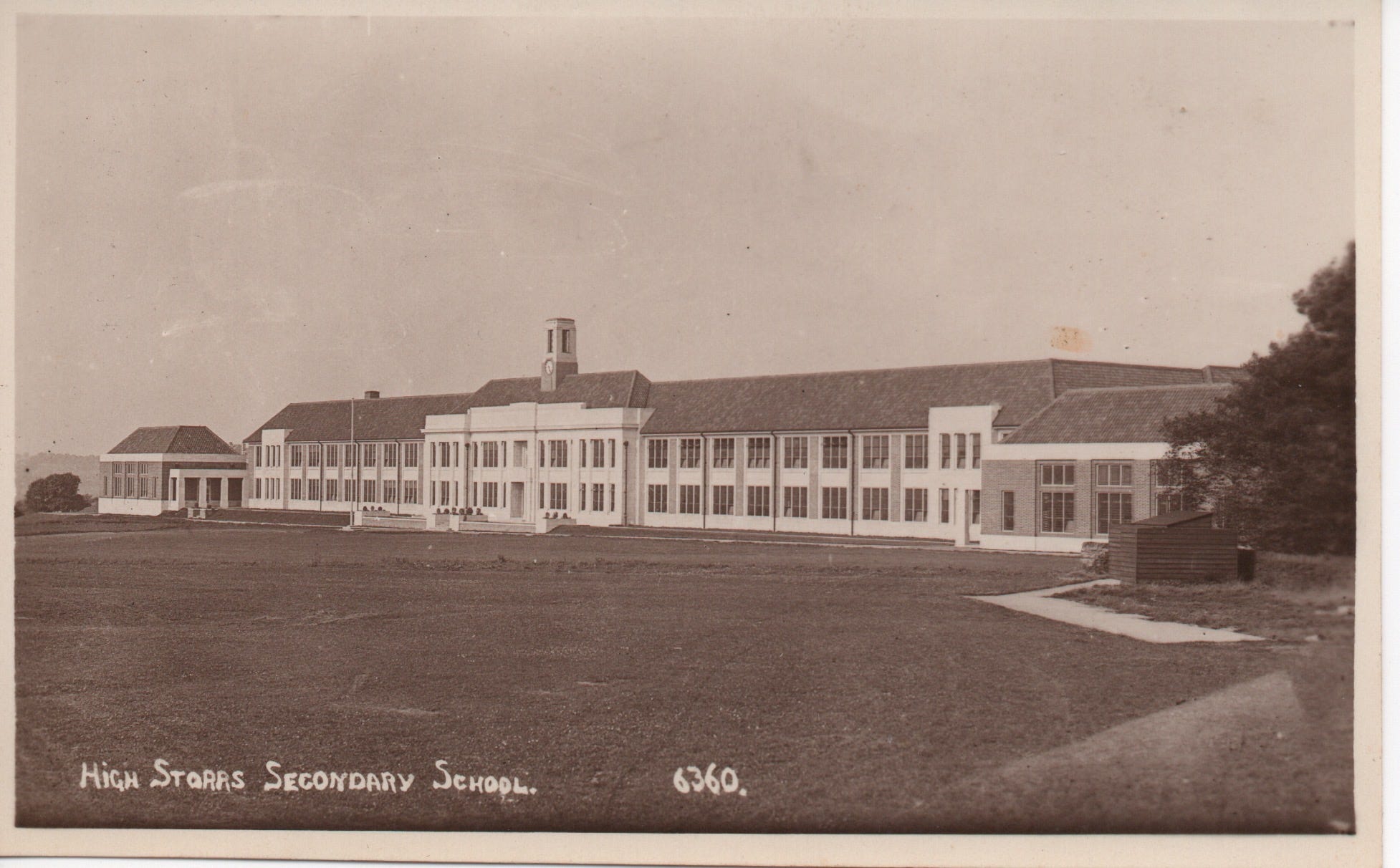
High Storrs Secondary School opened in 1933. Gordon (born 1918) was one of its original pupils, transferring over from Central School in Sheffield. He went on to train as a teacher, before enlisting in the RAF in 1941.
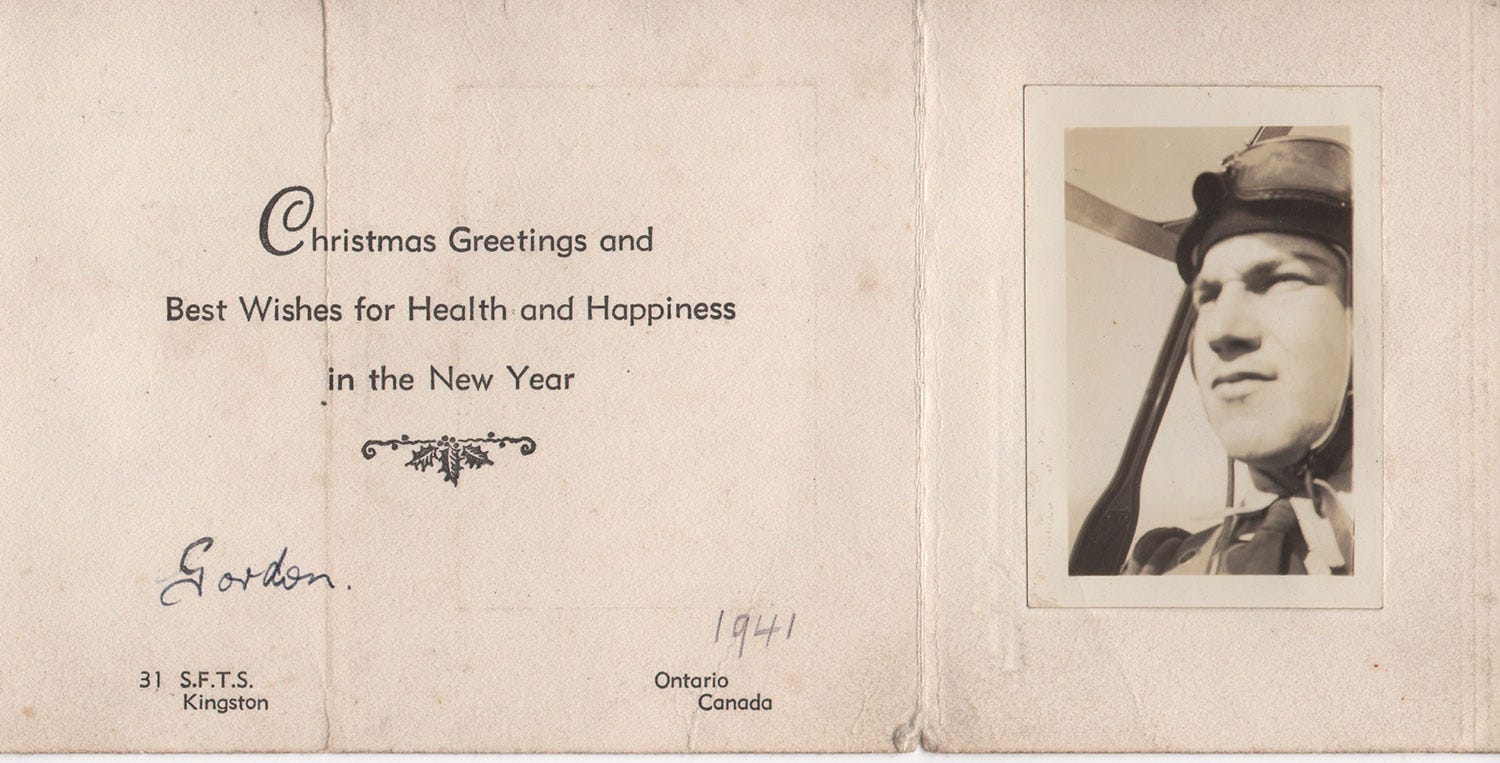
I was touched that the school staff are so engaged with the history of a pupil who was killed in action more than 80 years ago, and are making sure that he is remembered.
The school is a successful state secondary and as a listed building has been lovingly restored. The original parquet flooring is intact, as are the gorgeous art deco doors and glasswork. Gordon would certainly recognise it.
Although it’s the summer holidays, it was full of life – and music. Sheffield Youth Orchestra were rehearsing The Sorcerer’s Apprentice in the school hall when I arrived.
I spoke to a journalist from the Sheffield Star, who’s already covered some of Gordon’s story [paywalled] and will write a follow-up. It’s satisfying through my pieces on Substack to have brought Gordon’s story to the surface in Holland, where he died, and now in Sheffield, where he grew up. And he’s done me a favour in return, bringing me back to the city.
The Richardson Car
Gordon came from a family of inventors. His grandfather Ebenezer was a sewing machine maker. His uncle, Charles Ebenezer Richardson1, manufactured one of the first “assembly line” cars in 1921 (500 of them, £250 each). I visited Kelham Island Museum in Sheffield to see the best-preserved example of the Richardson Light Car.
Those colours! That soft top! I’m rather in love with it.


Buffer Girls
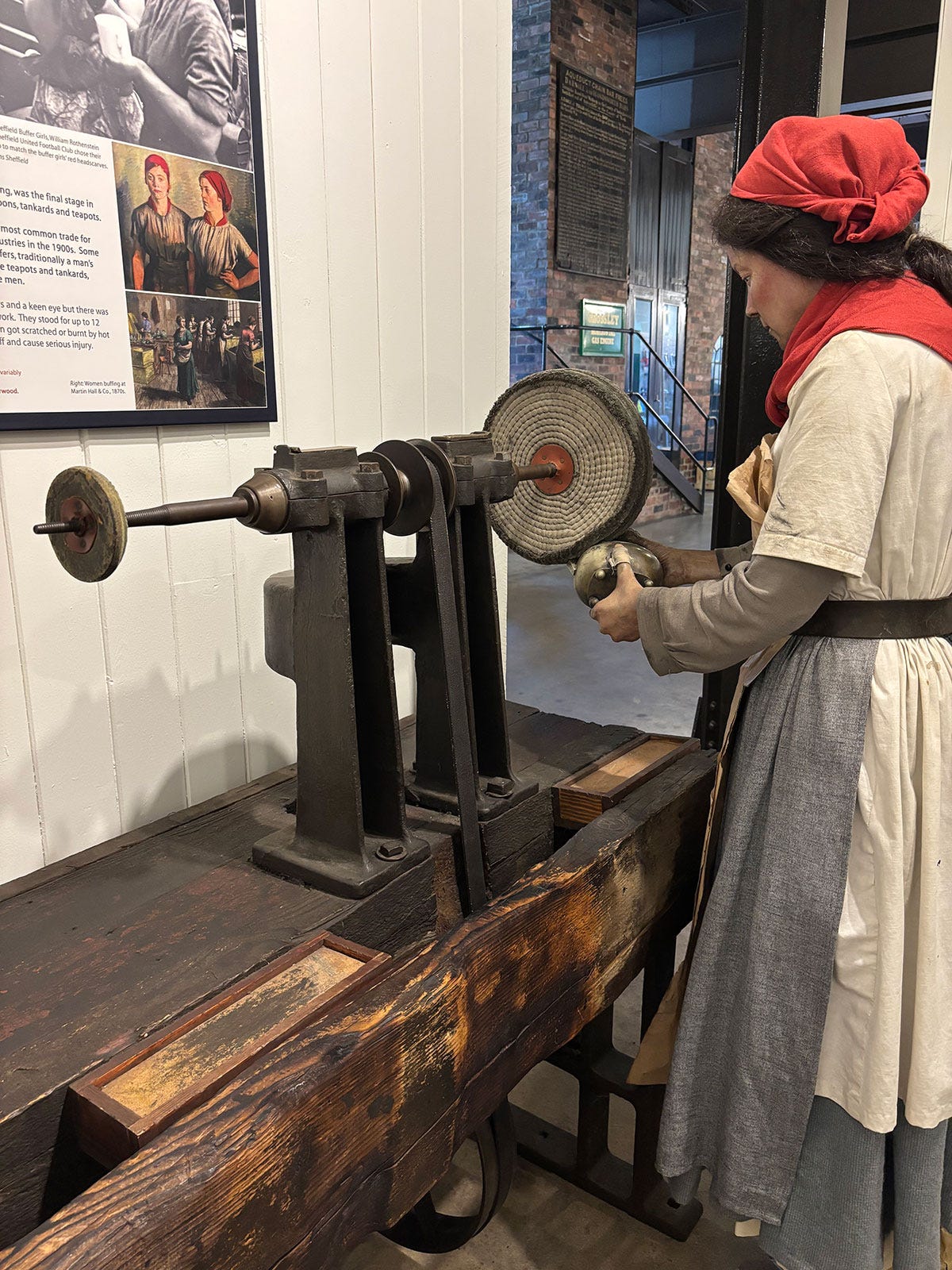
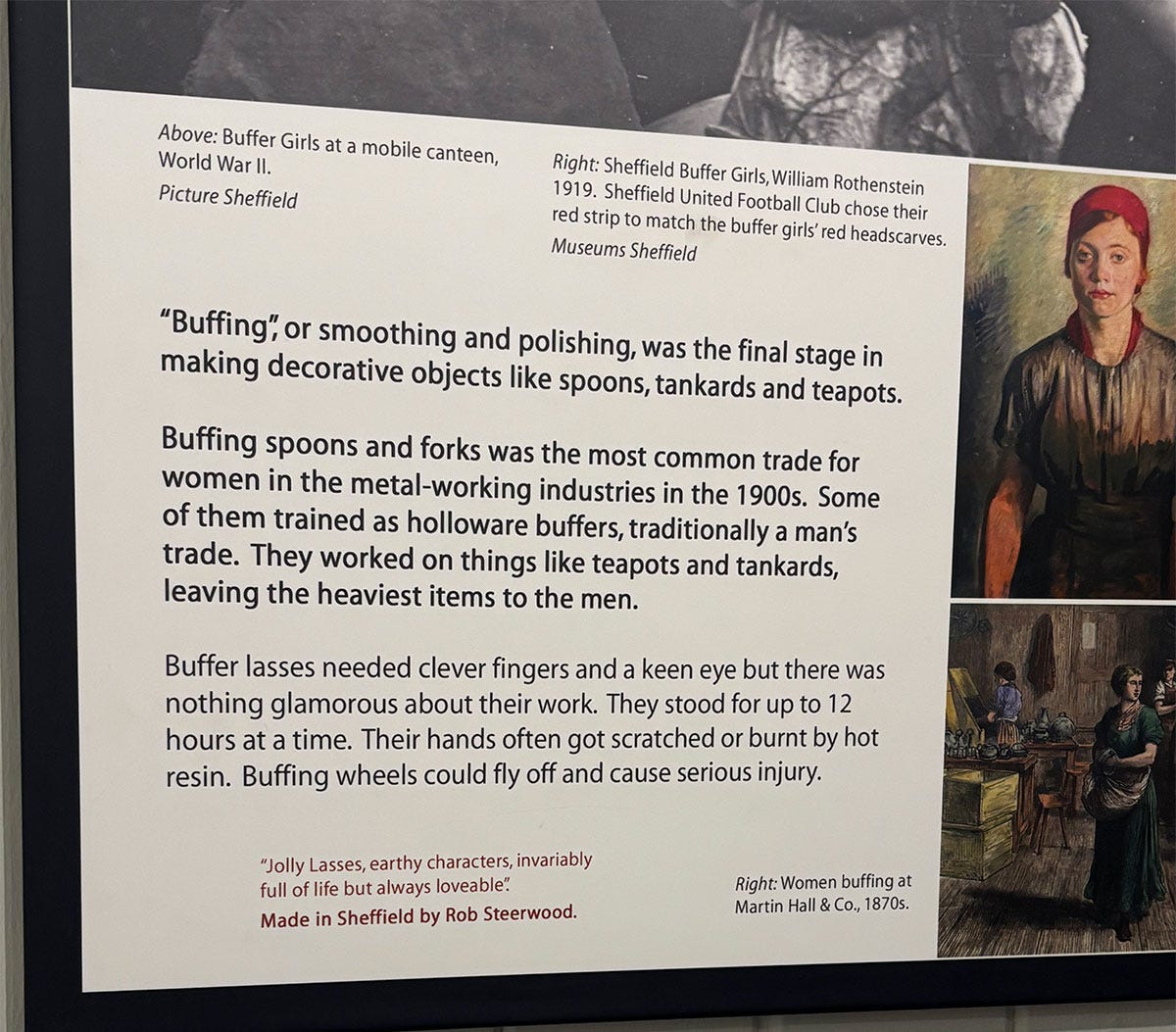
Kelham Island is a wonderful museum of Sheffield’s industrial heritage. There’s a display about the “Buffer Girls” who polished cutlery.
My great-grandmother was a buffer girl. My grandma, Annie Clarke (born 1888), and her sister, Florence (Gordon’s mother), were “errand runners”. As youngsters they helped out their mother by collecting the silverware for polishing.
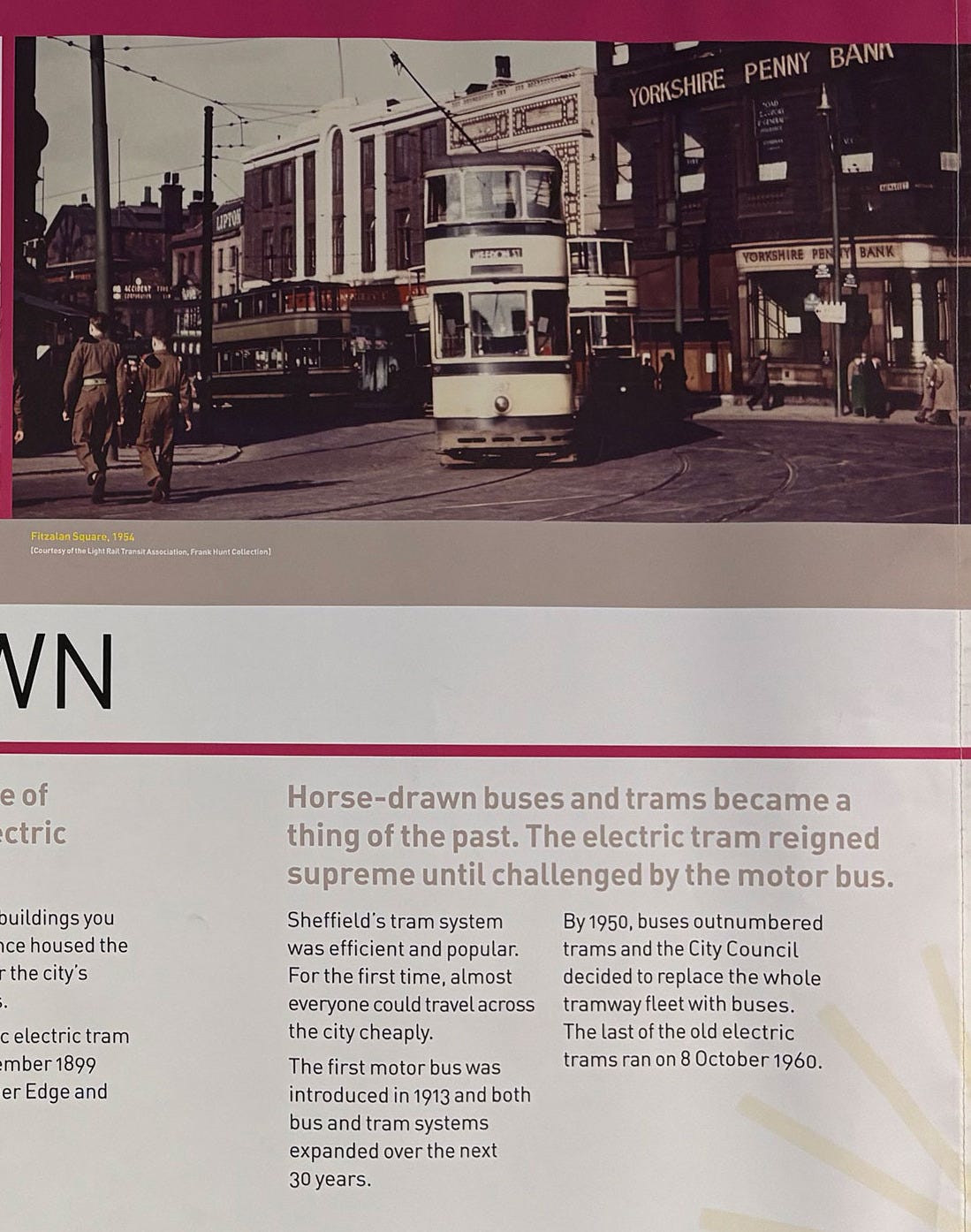
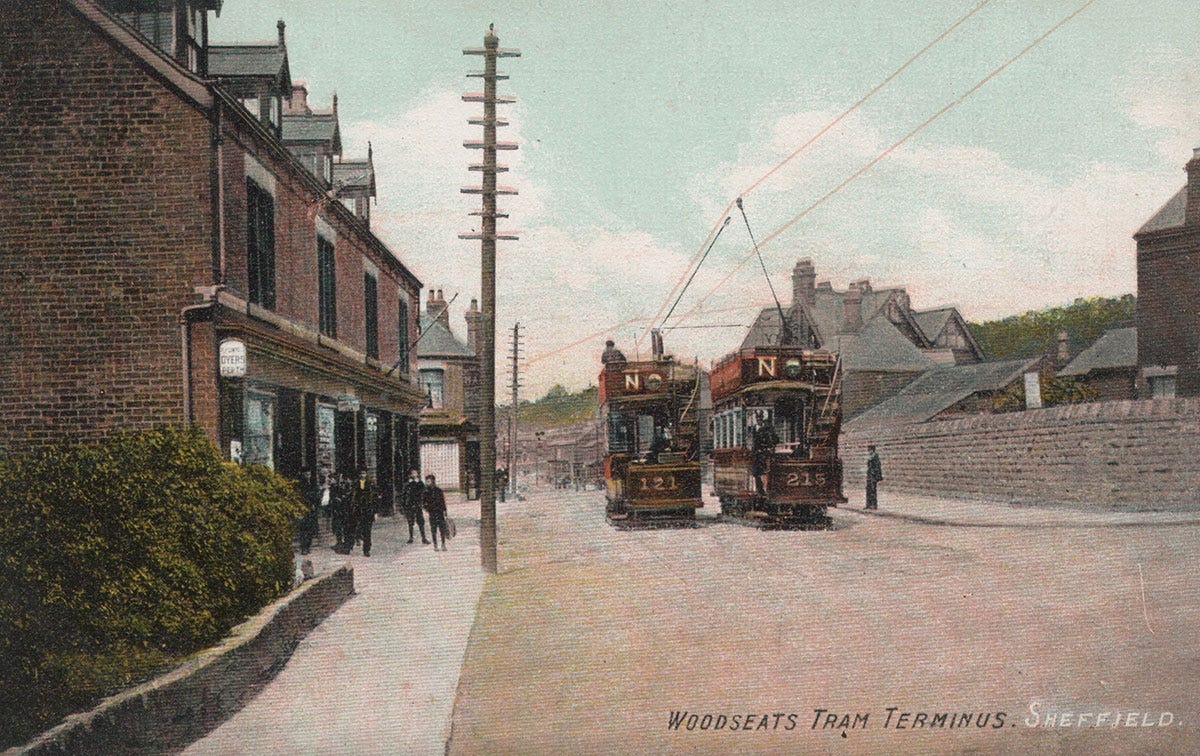
The section on trams is another link to my grandma, Annie Clarke. After the silver-polishing and before she married my grandad Varley, she was one of Sheffield’s first tram conductresses.
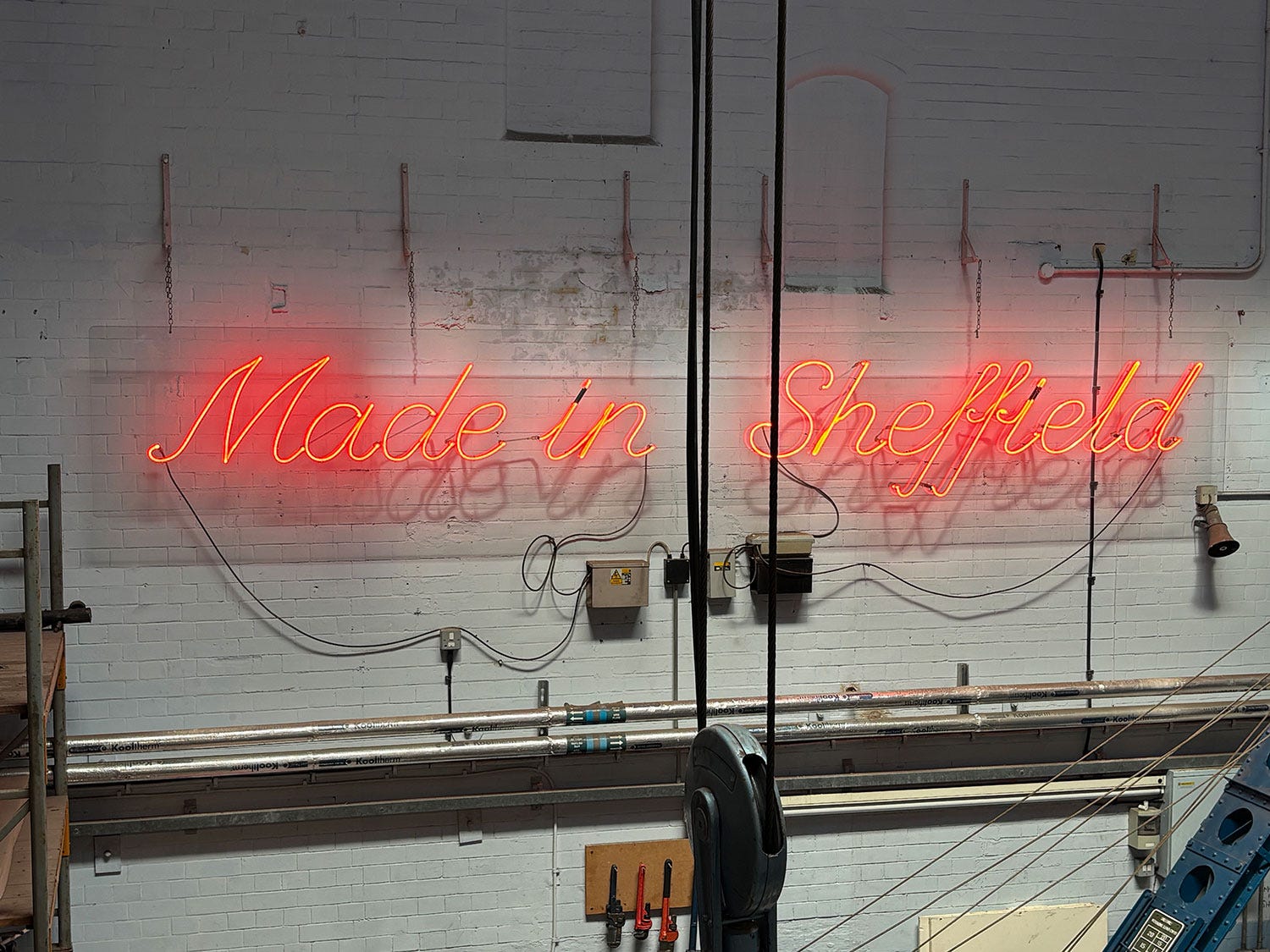
By the end of my trip north, I appreciated just how much of my family was literally “made in Sheffield”.
For years I’ve had recurring dreams of wandering around Sheffield city centre, feeling lost. Now I’ve been back and joined more dots, I’m hoping that dream will fade.
Bullseye!
It’s a miracle! I mentioned a few weeks ago, during Pshaw-gate, that I’ve had the same Wordle start word for years. Yep. “Flume” has finally come around! Now what?
Thanks to Elaine R. Frieman, of Why We Met Substack for including me in her collection of little love stories this week.
Please do comment if anything here resonates. I love to hear your views. And thank you for the warm response to my piece last week, Donating A Life.
I’ll be singing my heart out in France next week, so will be back with you on Thursday 13th August. Thanks for reading and see you then!
I realised while researching this piece that Charles Ebenezer Richardson (b. 1875), the car manufacturer, was Gordon’s uncle, not his grandfather. His grandfather Ebenezer (b. 1848) made sewing machines. A case of too many Ebenezers! Grace’s Guide to British Industrial History has an entry on CE Richardson, with census data from 1881, 1891 and 1901.
I hope you have a beautiful time singing in Paris.
The £250 car in 1921 would be about £11,000 today. Not bad for revolutionary tech and freedom.